

A stone that leaves for a trade fair is supposed to be the stone that comes home. Too often it is not. Artificial intelligence may at last give customs officers a way to tell the difference.

Vincent Wong | Harinee De Costa

Sept 21, 2026
ATA Carnet AML/CFT Gemetrics AI Gemmology Gem Fingerprint KROMA™
The Switch
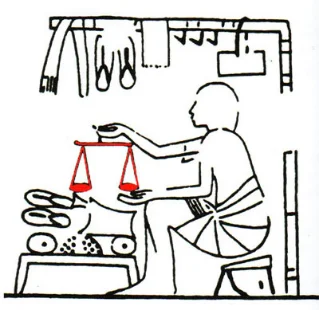
The ATA Carnet is one of the quieter successes of trade policy. Since 1961 this “merchandise passport” has let businesses carry goods across borders for exhibitions and sales trips. They pay no duty and post no separate bond at each frontier, provided the same goods come back. For gem dealers heading to fairs in Hong Kong, Bangkok, Geneva or Tucson it is indispensable. A parcel of rubies and sapphires can travel to a show, be offered to buyers and come home without being taxed twice.
The weakness lies in the word “same”. At re-entry, officers usually check what the paperwork allows them to check: the number of stones, their carat weights, a written description and whatever the eye can see. A well-chosen substitute passes all four tests. A dealer can sell a fine, unheated sapphire abroad and bring home a cheaper stone of similar colour, shape and weight. The substitute may be heated, mined elsewhere or grown in a laboratory. The carnet is discharged, and the valuable stone has in effect been exported without declaration, duty or the foreign-exchange receipts that should follow it.
The damage goes beyond lost revenue. A swapped stone is also a handy vehicle for moving value. Coloured gemstones are small, portable, hard to value and largely untraceable. That is why the Financial Action Task Force (FATF), the global standard-setter on money laundering, includes dealers in precious stones among the businesses its rules cover. A carnet loophole moves value without leaving a bank trail. Criminal proceeds can be turned into stones at home and cashed abroad, while the paperwork shows nothing amiss.
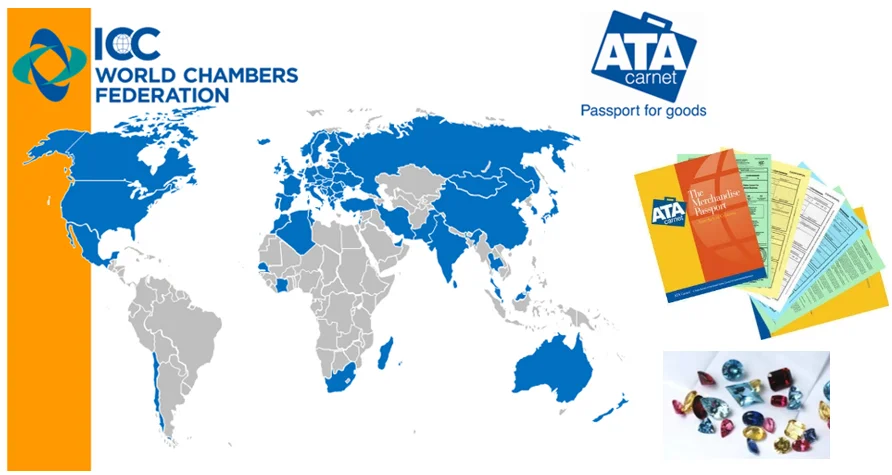
An ATA Carnet (stands for Admission Temporaire / Temporary Admission) is an international customs document that acts as a “passport for goods,” allowing merchants to temporarily export and import items duty-free and tax-free for up to one year. If gemstones are not re-exported and remain in the foreign country, the local customs authority can collect the applicable duties, taxes, and penalties from the local guaranteeing association, which will then bill the original Carnet holder.
A label that will not stick
Other valuables solved this problem long ago. Cars carry chassis numbers, watches carry serials and banknotes carry security threads. Gemstones resist such treatment. Anything attached to a stone, whether a tag, a sticker or a sealed bag, can be removed or moved to another stone. Anything inscribed on it fares little better. Laser inscription on the girdle is common for diamonds but rare for coloured stones, and a light polish removes it. Coloured stones are often recut as they change hands, and dealers dislike anything that reduce weight or marks a surface. Sealed parcels defeat the purpose of a fair, where stones are meant to be handled and shown.
Paper certificates do not fill the gap. A laboratory report describes a stone by its species, weight, measurements and colour, and sometimes its origin and treatment. But a description fits many stones. Two sapphires of the same hue, cut and weight can be indistinguishable on paper. Traceability schemes, including those built on blockchains, record a stone’s history. Yet they still depend on a reliable link between the physical object and the record. Without that link, a digital ledger is only as honest as the person who loads it.
What is needed is not a label put on the stone but an identity read from it.
Nature's barcode – ‘Gemetrics’
That identity has been there all along. Almost every natural coloured gemstone contains inclusions: tiny crystals, healed fractures, silk, colour zoning and fluid pockets. Gemmologists have used them for a century to tell natural stones from synthetics and to judge where a stone came from. The three-dimensional arrangement of inclusions in any one stone is, for practical purposes, unique, because no two sapphires grew alike. Add the stone’s facet geometry, outline and colour distribution, and the result is a signature that cannot be peeled off. Forging it would mean growing the same inclusions in the same places.
Three developments have made this signature readable at a border. The first is imaging. Compact photomicrography systems can now record a stone under several kinds of lighting, including darkfield and immersion, in about a minute, at a fraction of the cost of a laboratory microscope. The second is computer vision. Deep-learning models trained on large libraries of gem images can pick out the features that matter and ignore those that do not, such as dust, a greasy smudge or a slight change in position. The third is the cloud. Matching runs centrally, so a scan made at a remote counter can be checked against its enrolment record in seconds.
The approach borrows heavily from human biometrics. Face and iris recognition work on the same logic, comparing a fresh capture with a stored template. Gemstones turn out to be better subjects than people as they do not age nor undergo physiological transformation.
AI and KROMA™ harnesses the power of optical imaging, advanced image/video processing and machine-learning algorithms to generate the unique digital-tag that represents the finger-print of the gemstone, thus offering a solution to prevent fraud, track its provenance and creation of non-fungible tokens (NFT) to be traded transparently on blockchains.
How it works – KROMA™ and AI
One company has built the whole chain under one roof. Porolis, a gem-technology firm, pairs its own scanning hardware with its own artificial intelligence. Its patented KROMA™ device is a photomicrography scanner that films a loose stone as it rotates under controlled light. One pass records the stone’s colour and face-up appearance, as a grader would see it. A darkfield pass makes the inclusions glow. A third, with the stone immersed in a liquid of similar refractive index, makes the facets all but vanish so that the inclusions can be mapped.
The footage is synched to Porolis’ cloud, where an AI model distils it into a compact numerical fingerprint. From that fingerprint the system generates a UGIN, a unique gemstone identification number, tied to the stone’s inclusion map, colour, shape and cut. The UGIN, the fingerprint and the images are kept together as one secured record. That record can be attached to a carnet line item, a laboratory report or a bill of sale.
Re-identification is then simple. When a stone comes home from a fair, it is scanned again and its new fingerprint compared one-to-one with the record its UGIN points to. The system need not search a whole database. It asks a narrower question: is this the same stone?
The answer is a similarity score between 0 and 1, which two thresholds sort into three outcomes. “Pass” means a match, and the stone goes home. “Fail” means a different stone. “Refer”, the grey zone in between, sends the stone to a gemmologist for a manual check. That middle band matters. It stops the machine from making hard calls alone, and it gives honest dealers a way through if a stone has been cleaned or slightly chipped since it left.
Owning the full stack matters too. One firm designs the optics, captures the images, trains the models and runs the cloud. Every scan is therefore made under the same conditions, and each record passes from scanner to registry without changing hands. A fingerprint is only as trustworthy as the weakest link in the chain that produced it; a single, secured chain from end to end leaves few links to attack.
The technology has honest limits. Very clean stones have few inclusions to map and are harder to fingerprint. A repolished or recut stone has genuinely changed, and should fail. Good systems publish the share of stones they cannot enrol rather than hiding it, and offer a fallback check for those stones.
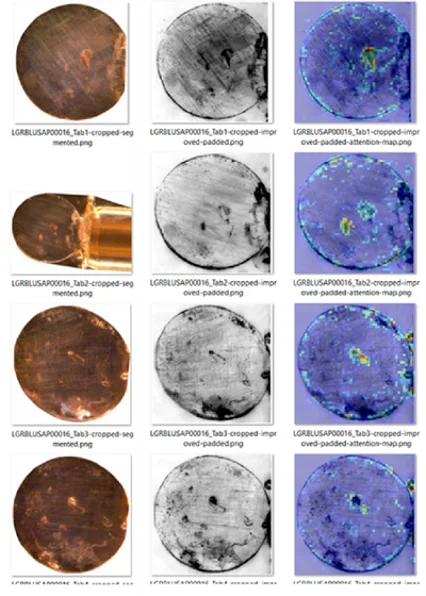
Advanced AI visual-transformer algorithms is capable to identify, characterize and map the unique features of a gemstone from the magnified image of its inclusions captured on KROMA™. The above 4 varied images (left column) are photographs of the table-facet of the same gemstone, and further processing using trained AI-models generates the feature maps (right column) for similarity-matching and uniqueness-identification. High-value gemstones can be scanned similarly and its digital signature recorded for verification in a central database.
Who gains
The state is the obvious winner. Closing the switch recovers duty and export earnings and makes trade statistics more accurate. It also gives anti-money-laundering supervisors evidence where they now have only declarations. That counts with FATF assessors, and with trading partners who increasingly ask how precious goods are controlled.
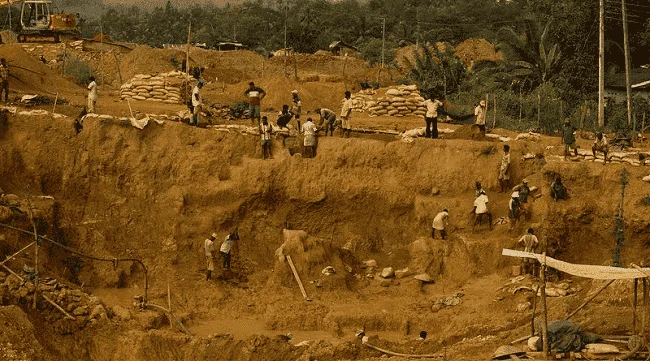
Miners and cutters gain more than they might expect. Swapping drains a producing country of its best material, and with it the price premium those stones command at home. A fingerprint created when a stone is first cut or exported could also anchor claims about provenance. A producing country could then market its stones on evidence rather than assertion.
Honest dealers gain speed and reputation. A Pass at the counter replaces haggling over descriptions. A clean record also helps with finance and insurance, since lenders and underwriters prefer collateral they can identify.
Consumers and the wider trade gain confidence. The coloured-stone business has long envied the traceability claims that diamonds can make. A stone that can be re-identified at any point is a stone whose story can be trusted, whether by the laboratory that graded it, an insurer after a loss or the police after a theft. Laboratories in turn gain a new role as referees and custodians of identity, not merely judges of quality
Proof, not paper
The carnet switch persists not because nobody cares but because nobody could prove it. Stones have been described but never identified. AI fingerprinting changes that by reading the unique identity nature has already written inside each stone. It will not catch every scheme, and it must earn trust through independent testing and honesty about its limits. But producing countries are tired of watching their best stones leave on what amounts to a one-way ticket. For them it offers something rare in the fight against illicit flows: a check that is quick, objective and hard to cheat.